
Riaz Hussain Pasha, Iqra Ali, Muhammad Akram Khan, Muhammad Arif Zafar, Adnan Hassan Tahir, Saif-ur-Rehman, Ali Hassan & Zaib-ur-Rehman
Riaz Hussain Pasha, Iqra Ali, Muhammad Akram Khan, Muhammad Arif Zafar, Adnan Hassan Tahir, Saif-ur-Rehman, Ali Hassan & Zaib-ur-Rehman
he use of the acupuncture method in traditional Chinese medicine (TCM) dates back more than 3,000 years. It entails inserting needles into certain bodily locations known as acupoints. These acupoints are situated along meridians, which are waterways. Acupuncture has been used to treat a variety of illnesses, from pain and stress to infertility and addiction (Garcia & Chiang 2007). It is predicated on the idea that the body’s meridians, or energy channels, are where the vital energy, or Qi, circulates. Through the stimulation of particular acupoints throughout the meridians, acupuncture treatment seeks to balance the flow of Qi and encourage healing. The use of acupuncture is gaining recognition and acceptance in contemporary healthcare setups as an alternative and complementary therapy for several conditions. This therapy is often used as an adjunctive treatment for the management of pain, reduction of stress, and alleviation of various health issues T relating to headaches, musculoskeletal disorders, and nausea and discomfort associated with chemotherapy treatments (Li et al., 2022). Its growing popularity is no doubt associated with the holistic nature of its work, focusing on restoring balance to the body’s energy that is disturbed by any underlying health issue rather than merely removing or treating the symptoms. Many individuals have embraced the fact that acupuncture is a nonpharmacological and minimally invasive treatment option, clearly appreciating its potential to improve the overall wellbeing of the patient (Giovanardi et al., 2023).
Acupoints are specific points on the skin’s surface where Qi energy may be accessible and activated using pressure, heat, or needles. There are over 350 acupoints in the body, each with its own purpose and link to the meridians. The human body possesses a network of acupoints interconnected by meridians, which are invisible channels. In addition to the 12 major meridians that correspond to different organ systems (Schweinitz, 2015), there are eight additional meridians. Skilled acupuncturists analyze patients’ symptoms, diagnose underlying imbalances, and select appropriate acupoints for treatment. They delicately insert fine needles into the skin, leaving them in place for a specific duration to activate the acupoints. Enhancing techniques like twisting, heating, or manipulating the needles may further optimize the treatment (Chen et al., 2021).
The activation of acupuncture points in the body triggers various physiological reactions. Natural chemicals are released in response to these stimuli, including endorphins, neurotransmitters, and hormones. The body uses these substances to regulate basic healing processes such as the immune system, inflammation, and pain perception. These physiological reactions also support the body’s natural healing mechanisms. Acupuncture also promotes blood circulation and oxygenation, thereby nourishing the tissues and organs (Gilomen & Lee 2015). The flow of vital Qi energy, crucial for maintaining health and wellness, relies on the meridians. Factors such as stress, an unhealthy diet, a sedentary lifestyle, or other conditions can lead to blockages or deficiencies in Qi energy. Acupuncture is not only utilized for addressing specific ailments but also for promoting overall well-being and preventive care. By eliminating blockages, strengthening deficiencies, and restoring balance to the Qi energy, acupuncture fosters healing and helps prevent illness (Chen et al., 2021).
Acupuncture has been shown to be an incredible form of therapy, helping with a wide range of issues like pain, digestive troubles, breathing problems, hormone imbalances, nervous system conditions, and emotional distress (Alvarez, 2015). It goes beyond just treatment, improving overall health and wellbeing, as well as preventative care. It has a history that goes back thousands of years. It’s a safe and effective method rooted in TCM which aims to restore balance within the body’s energy pathways. Key to acupuncture are acupoints and meridians, which allow targeted stimulation of the body’s life force energy to boost health and ward off sickness. An essential component of acupuncture is the utilization of acupoints and meridians, which enables precise and efficient Qi energy stimulation to improve health and ward off disease (Chen et al., 2021). The function of acupoints and meridians in the acupuncture method is explained in this chapter.
The idea of location is based on the flow of Qi, the body’s life force energy (pronounced “chee”). In accordance with TCM, the body’s meridians and pathways serve as the Qi’s channels. The body is healthy when the Qi is flowing freely, but when it is obstructed, illness or disease may result. Acupuncture is said to release Qi blockages and bring harmony and balance back to the body.
Acupoints’ link to anatomical structures, including bones, muscles, and tendons, determines where they are located (Xing et al., 2013). These acupoints are located by feeling with the practitioner’s fingertips, and sometimes palpation is used to identify tissue changes showing an acupoint. The depth needles are inserted varies, usually from a few millimeters to a few centimeters
To create a standardized naming system for acupoints, respected groups like the World Health Organization (WHO) and the International Standardization Organization (ISO) developed a comprehensive nomenclature. This system assigns a unique code to each acupoint consisting of a letter, number, and sometimes a letter suffix. The letter represents the corresponding meridian, while the number indicates the acupoint’s location along that meridian. This standardized approach ensures clear and consistent communication within the field of acupuncture (Al-Shura, 2021).
The acupoints LI4 and ST36, for instance, stand for the fourth and 36th points, respectively, on the Large Intestine and Stomach meridians, respectively. Various acupoints situated at the same location on various meridians are identified by a letter suffix (Al-Shura, 2020).
|
Acupoints
|
Description
|
|---|---|
|
Back-shu points
|
Situated on the back, these points represent the internal organs.
|
|
Front-mu points
|
The internal organs are represented by these points, which are found on the front of the body
|
|
He-sea Points
|
These points, which are utilized to treat digestive issues, are situated at the sites where the meridians enter the organs
|
|
Jing-river points
|
These locations, which are utilized to treat respiratory conditions, are situated where the meridian pathways join the trunk. Jing-well points These are the spots on the extre
|
|
Shu-stream points
|
Used to relieve joint and muscular discomfort, these points are found along the paths of the meridians.
|
|
Ying-spring points
|
These points, which are found on the fingers and toes, are utilized to alleviate ailments brought on by excessive heat.
|
The role of acupoint In TCM is based on the notion that the body is considered a complex meshwork of interconnected systems. It involves five basic constituents such as wood, fire, metal, water, and Earth, and along with this contains a range of organs, including the heart, lungs, spleen, kidneys, and liver. These constituents are believed to make up the complete body network in TCM philosophy. Every particular constituent of this system has a unique function and relates to a specific meridian (Chang, 2013).
The five elements and organ systems are said to be in harmony when acupoints are stimulated, which is thought to control the flow of qi and blood via the meridians. This is said to promote healing and health by restoring harmony and balance to the body. Acupoints in animals serve comparable purposes to those in humans. Some of these tasks consist of:
Pain relief: Animals frequently receive acupuncture to relieve discomfort brought on by musculoskeletal conditions such as arthritis and intervertebral disc disease. Jing-Well and YingSpring Acupoints are two acupoints used to relieve pain.
Respiratory Disorders: Asthma and chronic obstructive pulmonary disease are two respiratory conditions that can be treated with acupuncture. Jing-River Points and Back-Shu Points are acupoints that are used to treat respiratory conditions.
Digestive Disorders: Acupuncture can be used to treat digestive conditions, including constipation and diarrhea. HeSea and Front-Mu acupoints are utilized to treat digestive issues.
Basic acupoint types Animals have a variety of acupoints that are listed below
Primary acupoints: The primary therapy focuses are listed above. They are situated along the meridian lines, which are the body’s energy channels
Extraordinary acupoints: These are extra, not-on-themeridian acupoints with particular purposes. The effects of key acupoints are boosted, or they are employed to treat certain ailments.
Ashi points: are sore or uncomfortable spots in the muscles or tissues that are sensitive points. Despite not being on the meridians, they may be treated.
Acupoints of animals are named based on the same rules applied to human acupoints. Acupoints are located on the body where the energy flow can be transformed to promote healing and re-establish balance. According to (Hammerschlag et al., 2008), Acupoints are located on the body where the energy flow can be transformed to promote healing and re-establish balance. Needles are used to stimulate these sites during acupuncture, which may result in a local or systemic reaction from the body.
The location and circumstances being treated determine the precise function of acupoints in animals. For example, acupoints located on the stomach meridian are used mostly for the purpose of treating digestive conditions, while acupoints on the bladder meridian are utilized mostly to treat renal issues. Acupoints do have a general influence on the body, in addition to their specific function like reducing inflammation, enhancing circulation, and promoting relaxation in the body. These effects are considered to be supportive in the treatment of a number of animal conditions (Chung et al., 2023).
These are believed to be the pathways that transform the qi or energy that flows along the body. The body of a human contains 12 primary meridians, either of which is associated with a specific organ. (Al-Shura, 2021). For example, the stomach meridian is connected to the digestive system, while the meridian of the lung is related to the respiratory system. Even though the meridian is associated with organs, meridian lines cannot be seen with the visible eye; they can only be visualized on the body by using an acupoint location. It is thought that the meridians link the acupoints and form a complete network that allows the movement of qi energy throughout the whole body.
Acupuncture uses a variety of meridian types, each with a distinct name and purpose which are listed below (Chang, 2013).
Primary meridians: Primary meridians usually are denoted as the regular meridians, as these are the most frequent meridians used in acupuncture techniques. They are divided into twelve pairs, each of which describes a unique organ system of the body. The respiratory system is related to the Lung meridian, which is one of several organs that each meridian is named (Beach, 2010). Treatment of acupuncture frequently makes use of these meridians, which are believed to be the major pathways for the flow of qi energy. The body of a human has twelve main meridians, either of which is linked to a particular organ system. Out of these, six are yin meridians, and six are yang meridians. The organ system, which stores or processes fluids like blood, lymph, and food, is linked to the yin meridians. The main types of meridians are 12 which are listed below
The lung meridian (LU): It runs from the chest all the way down the arm to the thumb. It is connected to the lung and is thought to control how much oxygen and energy are distributed throughout the body
The large intestine meridian (LI): It runs from the index finger up the arm and into the face. It is connected to the large intestine and is thought to control how quickly waste and poisons leave the body.
The stomach meridian: It runs from the face to the foot through the body. It is linked to the stomach and is believed to manage the distribution of nutrients and energy throughout the whole body.
Spleen meridian (SP): This meridian rises up the body to the chest from the foot. It is linked to the spleen and is believed to manage how energy and blood are distributed throughout the entire body.
Heart meridian (HT): This meridian extends from the chest to the pinky finger of the arm. It is linked to the heart and is believed to manage the flow of blood and energy distribution throughout the entire body.
The small intestine meridian (SI): It runs from the pinky finger up the arm and into the face. It is linked to the small intestine and is believed to manage the distribution of waste and nutrients throughout the entire body.
Bladder meridian (BL): Initiates at the foot point and extends through the head along the entire back of the body. It is related to the bladder and is thought to control the body’s urinal and waste excretion flow.
Kidney meridian (KI): This meridian runs from the foot to the chest along the body. It is connected to the kidneys and is thought to control how fluids and electrolytes move through the body.
Pericardium meridian (PC): This meridian runs from the middle finger on the arm down to the chest. It is linked to the pericardium, which is a membrane that encloses the heart and is believed to manage the receiving of blood and energy to the entire body.
The triple burner meridian (TB): extends from the hand to the head, up the arm to the foot, and down the body. It is connected to the triple burner, a term used in Chinese medicine to describe the top, middle, and bottom portions of the body, and is said to control the movement of fluids and energy inside the body.
The gallbladder meridian, or GB: runs from the head to the foot along the body. It is connected to the gallbladder and is thought to control how much bile and waste leave the body.
Liver meridian (LR): The liver meridian, which extends from the big toe to the chest, is utilized to cure diseases, including liver illness and irregular menstruation.
Even though they are less well-known than the principal meridians, the remarkable meridians are nonetheless significant in acupuncture. There are eight remarkable meridians, and each one serves a special purpose. These meridians are utilized to treat more serious and persistent health conditions since it is thought that they have a wider impact on the body than the basic meridians.
The major meridians are connected by a network of twelve channels known as the Luo-connecting meridians. They are said to assist in controlling the flow of qi and are used to treat imbalances or blockages in the principal meridians. As an example, the Lung Luo-connecting meridian is called for the principal meridian it links to.
The divergent meridians are a collection of pathways that deviate from the main meridians and link to deeper organs and tissues. They are used to treat chronic or complicated health disorders and are thought to assist in controlling the internal organs. Every divergent meridian has the name of the principal meridian from which it splits off, for example, the Lung divergent meridian.
Deeper, more persistent problems are addressed via a network of routes known as The Eight Extraordinary Vessels. They are used to treat problems with the immune system, hormones, and neurological system and are thought to control the body’s essential energy. Each vessel has a distinct purpose and is given a name that reflects it, for example, the Conception Vessel or the Governing Vessel.
In summary, there are several types of meridians used in acupuncture, each with its own specific function and nomenclature. The primary meridians correspond to specific organs in the body and are the most commonly used in acupuncture. The extraordinary meridians have a broader influence on the body and are used to address deeper and more chronic health issues. The Luo-connecting meridians connect the primary meridians and are used to regulate the flow of qi, while the divergent meridians branch off from the primary meridians and connect to deeper organs and tissues. Finally, the Eight Extraordinary Vessels are used to address deeper, more chronic issues and regulate the body’s vital energy.
In Animals, the same system of meridians is followed according to the systems followed in humans, including the primary meridian system involving twelve primary meridians, the Luo-connecting meridian system, and the divergent meridian system. In addition to these three main types of meridian systems, there are also several other meridians that are less commonly recognized. For example, the muscle meridians are a group of 12 meridians that correspond to specific muscle groups in the body. The tendon meridians are a group of 12 meridians that correspond to specific tendons in the body. The cutaneous meridians are a group of 12 meridians that correspond to specific areas of the skin.
The functions of the meridians in acupuncture are closely related to the TCM concept of yin and yang. The yin meridians are associated with nourishment and support, while the yang meridians are associated with movement and activity. When the flow of qi is balanced along the meridians, the body is healthy and in harmony (Zhuang et al., 2013). When the flow of qi is disrupted, blocked, or deficient, it can lead to illness and disease.
The selection and working of acupoints and meridians in humans and animals depend on the condition being treated and the individual’s unique symptoms. Acupuncture practitioners use a variety of methods to identify the appropriate acupoints and meridians, including pulse diagnosis, observation of the tongue, and palpation of the body (Tang et al., 2018). In human acupuncture, the choice is based on the TCM concepts of locating the underlying imbalances and treating them appropriately (Li et al., 2022). For instance, if a patient complains of back discomfort, an acupuncturist may choose points along the Gallbladder or Bladder meridian, which run down the side of the body, respectively. To assist in balancing the body’s total energy, the practitioner may additionally decide to put spots on the Governing vessel, which runs up the back of the body, or the Conception vessel, which runs along the front of the body (Li et al., 2022).
In veterinary acupuncture, the choice of acupoints and meridians is made using a combined approach of the theories of TCM and contemporary veterinary science. To establish the appropriate course of therapy, practitioners may utilize a variety of diagnostic techniques, such as palpation of the animal’s body, observation of the animal’s stride, and assessment of medical records and laboratory results (Dongchen et al., 2015). For instance, if a horse has lameness, an acupuncturist may use points along the Bladder or Gallbladder meridians, which run down the side and rear of the horse’s body, respectively. To further assist in addressing the particular problem, they could additionally incorporate points on the Liver meridian, which is connected to the tendons and ligaments.
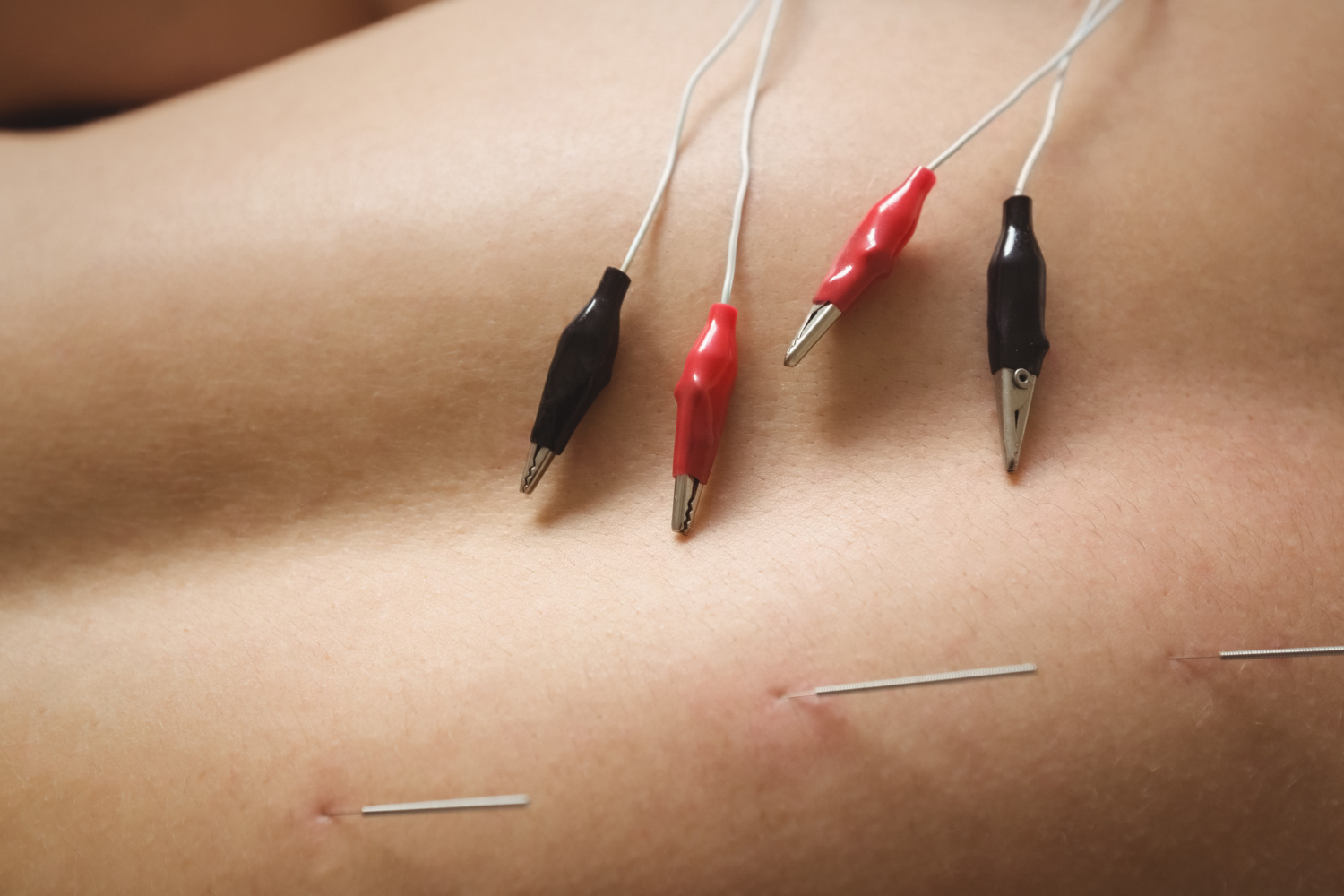
Human and animal acupoints both functions similarly. According to (Qian et al., 2019), the flow of Qi is said to be stimulated by inserting needles into specific acupoints, bringing about balance and harmony inside the body. However, there are some variations in how acupoints are used in animals and people. First, compared to humans, animals often implant needles at a shorter depth. This is due to the fact that animal skin and subcutaneous tissues are often thicker than human tissues, making deeper needle insertion uncomfortable and painful. Second, compared to humans, animals usually have needle retention for a shorter period of time. This is because extended needle retention might make animals restless or disturbed (West & Ferguson 2019). Last but not least, alternative methods like acupressure, laser treatment, or electro-acupuncture may be used to stimulate acupoints in animals (Jia et al., 2012). When using certain animals or in specific circumstances when a needle insertion is not possible or advised, several alternatives may be preferred.
Animal meridians function similarly to human meridians. According to TCM, stimulating particular spots along the meridians can balance and harmonize the flow of Qi, promoting health and healing (Chung et al., 2023). However, there are notable variations in how meridians are operated in animals and humans. Compared to humans, animals’ meridians may be located slightly differently (Ferguson & O’Leary 2006). For instance, some meridians may be a little deeper or thinner in animals than in people. In addition, different treatments may last longer or occur more often in animals (McCauley & Glinski 2004).
Animal meridians function similarly to human meridians. According to TCM, stimulating particular spots along the meridians can balance and harmonize the flow of Qi, promoting health and healing (Chung et al., 2023). However, there are notable variations in how meridians are operated in animals and humans. Compared to humans, animals’ meridians may be located slightly differently (Ferguson & O’Leary 2006). For instance, some meridians may be a little deeper or thinner in animals than in people. In addition, different treatments may last longer or occur more often in animals (McCauley & Glinski 2004).
In conclusion, the proper selection and effective utilization of acupoints and meridians form the cornerstone of acupuncture therapy. The location of the problem, the core cause of the sickness, and the particular qualities and constitution of the person being treated all impact the selection of acceptable acupoints. Acupuncture has evolved as a beneficial complementary therapy for a wide range of illnesses that benefit both animals and people. Acupuncturists successfully select the acupoints and meridians that would best address the particular needs of each individual by carefully analyzing the patient’s symptoms and medical history. Notably, a recent study has revealed a link between the distribution of nerves, blood vessels, and connective tissue and the precise positions of acupoints throughout the meridians.
Riaz Hussain Pasha, Iqra Ali, Muhammad Akram Khan, Muhammad Arif Zafar, Adnan Hassan Tahir, Saif-ur-Rehman, Ali Hassan & Zaib-ur-Rehman
Sulaiman Khan, Riaz Hussain Pasha, Iqra Ali, Awais ur Rehman Sial, Ayesha Humayun, Adnan Hassan Tahir & Muhammad Arif Zafar

Hassnain Khan, Muzammil Zaman Khan, Mayra Ihsan, Nizam-Ud-Din1, Azka Zaheer, Bilal Ahmed Khan, Aneela Gul & Jameel Ahmed Buzdar
Evelyn Saba, Mansur Abdullah Sandhu, Arfan Yousaf, Usman Rashid & Man Hee Rhee